1. Who digitizes your logo?
Before a machine can stitch your logo, someone has to turn it into a stitch file: where each stitch goes, how dense, in what order. This step, digitizing, decides most of the quality. Many companies send it out to the cheapest bidder or run the logo through auto-digitizing software. The result is fabric pulled tight around the logo, letters that run together and outlines that don't line up. Ask directly: do you digitize in-house, and do you set the file for my specific fabric?
At Neatko: we digitize and embroider in our own studio. A polo, a fleece and a cap each get their own settings.
2. How do they keep the fabric from puckering?
Puckering is the wavy, gathered look around a logo, and it's the most common way an expensive shirt gets ruined. It comes from the wrong stabilizer, a file that's too dense, or fabric stretched too tight in the hoop. Ask what stabilizer they use for your garment and how they hoop thin performance fabrics.
At Neatko: we pick the stabilizer for each fabric. Thin performance knits get a double stabilizer, we hoop without stretching, and we add a water-soluble topping when the fabric needs it. On very thin fabrics some puckering can't always be avoided, which is why we test first.
3. What machines do they stitch on?
Commercial multi-needle embroidery machines hold tension and registration better than home machines, especially on long runs. The machine alone doesn't guarantee a good result, since the file and the operator matter more. But a studio that stitches corporate orders on a home machine is a warning sign.
At Neatko: several commercial machines in our own studio.
4. Will you see a test stitch on your actual garment?
A digital proof shows the size and placement. Only a stitched sample shows how the thread color reads on the fabric and whether the fabric holds flat.
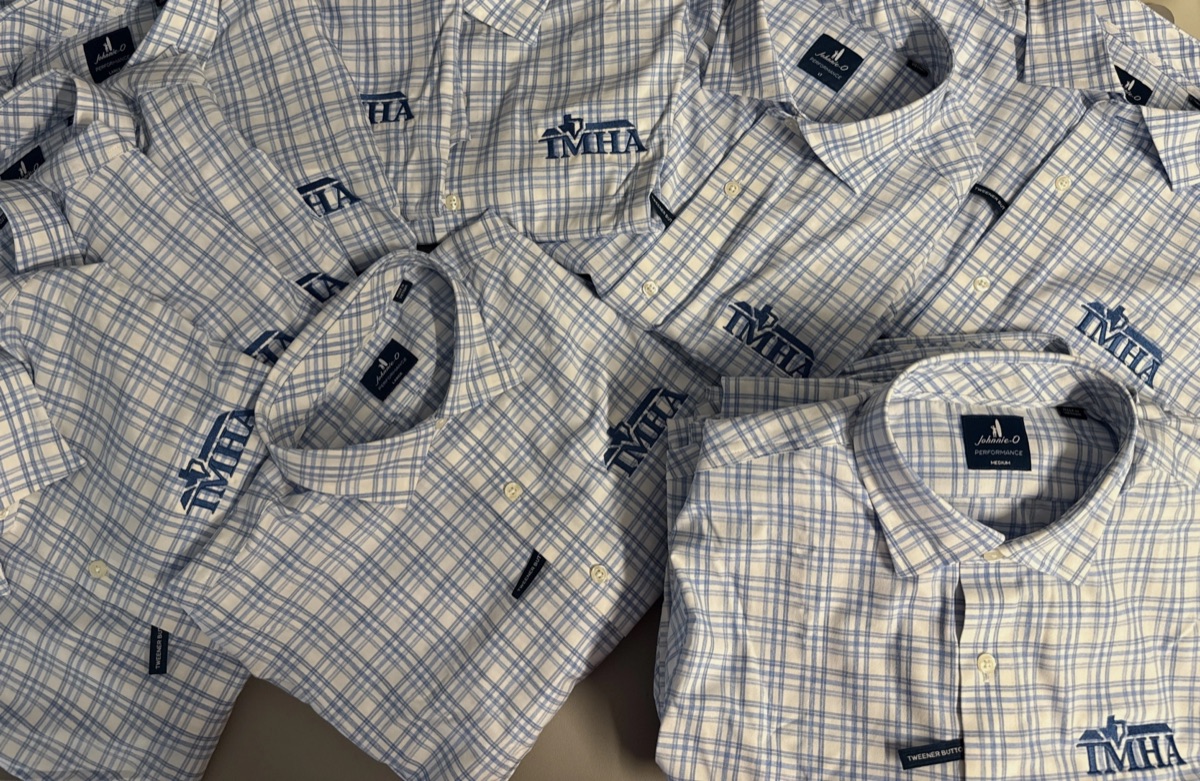
From our work: TMHA's navy, red and gray logo clashed with a blue plaid johnnie-O shirt. We stitched three thread options side by side on the actual shirt and picked a dark blue that stays in the shirt's color family but still reads clearly.
5. What garments can they source?
Some companies sell a catalog of basic blanks. Others can source premium brands that your team already likes wearing. Ask which brands they can get, whether there are minimums per style, and how long garments take to arrive.
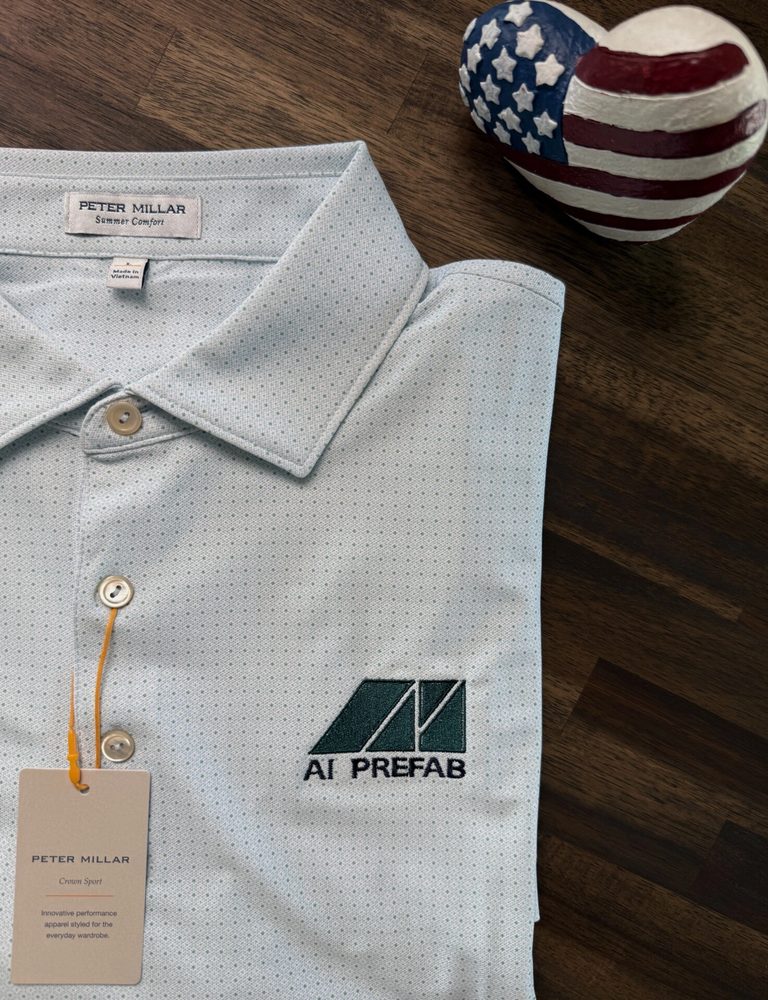
At Neatko: Peter Millar, johnnie-O, Stio, Outdoor Research, BYLT, Varley and other premium labels through our suppliers. Garments usually arrive in about 5 business days.
6. Do they check every garment?
Even premium suppliers occasionally ship a piece with weak fabric, a crooked seam or loose threads. Ask whether garments are inspected before they go under the needle, not after.
At Neatko: every garment is checked when it arrives from the supplier.
7. Minimums and sizes
Ask about the minimum order and whether they can fit everyone on the team, including women's cuts and big and tall sizes.
At Neatko: no minimum on our side; some brands set their own per-style minimum, and we tell you before you order. We find women's cuts and big and tall sizes (3XL–4XL, Tall) from brands that make them.
8. Reorders, and who owns the stitch file
Your second order should look exactly like the first. That only happens when the company keeps your approved file, thread colors and placement on record. Also ask whether you can get your stitch file if you ask for it.
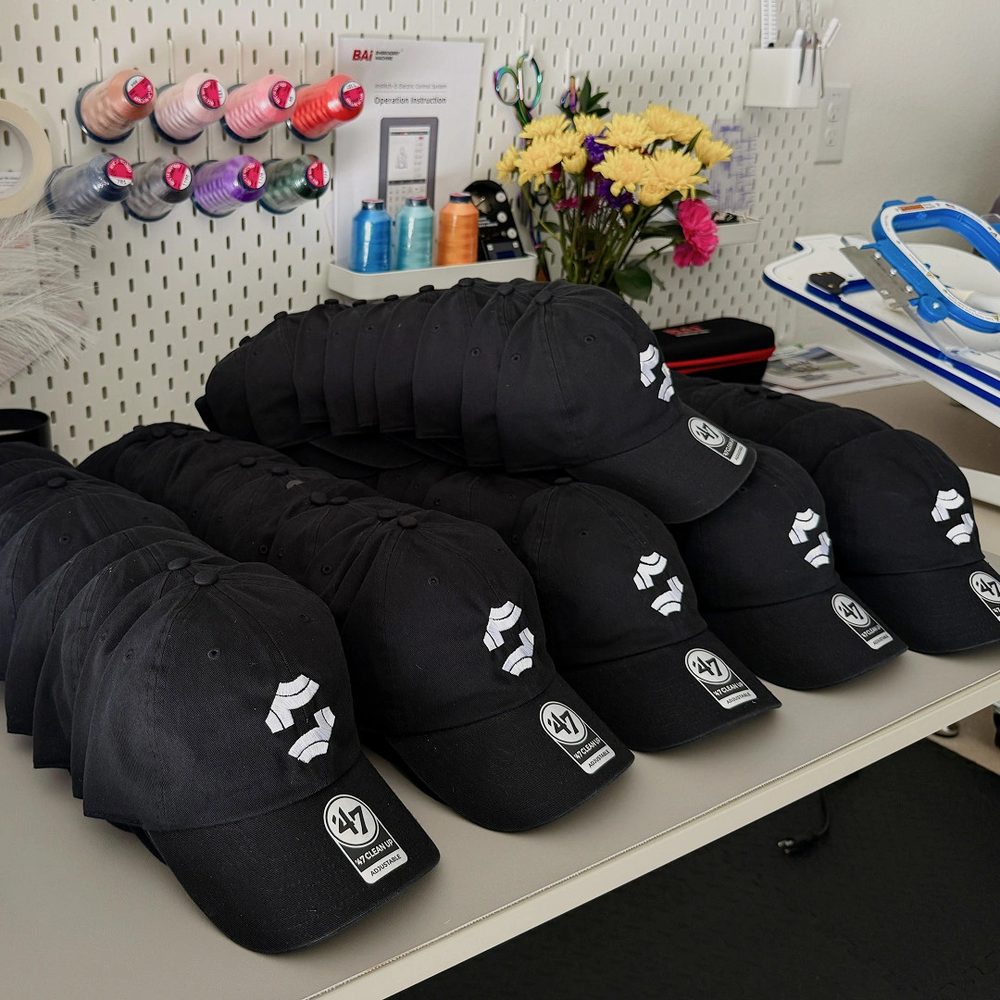
At Neatko: the file stays on hand, so reorders match. Gallatin AI has reordered black caps since spring 2026, 120 caps so far, with the same file, thread and placement every time. If you want your file, we send it: you paid for the digitizing.
Note that a DST, the machine file, is a finished output. To resize it or move it to a different fabric properly, it has to be re-digitized.